Every Kiwi who has priced up a graphics card, a phone or some other consumer technology product knows the feeling. You find the one you want, you see what the official retailer is asking, and then you spot another shop selling the identical product for a couple of hundred dollars less. Same brand, same specs. And you sit there wondering what the catch is.
Parallel importing is the catch. It is just not the one most people assume.
Parallel Importing is legal. If you buy from a New Zealand retailer, grey or not, the Consumer Guarantees Act still covers you. What you tend to give up is the manufacturer's warranty, and whether that matters comes down entirely to what you are buying.
So what is a parallel import?
It is the real thing. Genuine manufacturer, genuine product, genuine box. The only difference is that whoever brought it in isn't the brand's authorised distributor. They found it cheaper somewhere else, shipped it here, and undercut the official price.
Which is why it isn’t correct when people say "parallel import" and "fake" like they mean the same thing. A counterfeit is a knock-off made by someone who isn't the manufacturer. A parallel import is the manufacturer's own product that came through a different door.
Consumer Protection has a reasonable sniff test for spotting fakes. Most of the time, the price sits a bit under what the brand normally charges here, the product isn't sold anywhere else in New Zealand, and you can't work out any link between the seller and the manufacturer.
Is it legal?
Yes, and it has been for ages. Parallel importation is lawful here, as long as the trademark was put on the goods with the trademark owner's authorisation. In that case bringing them in doesn't infringe trademark or copyright.
You can see it plainly enough. Auckland's Parallel Imported has been going for over 20 years, selling phones, CPUs, graphics cards, motherboards, consoles, drones, cameras and monitors.
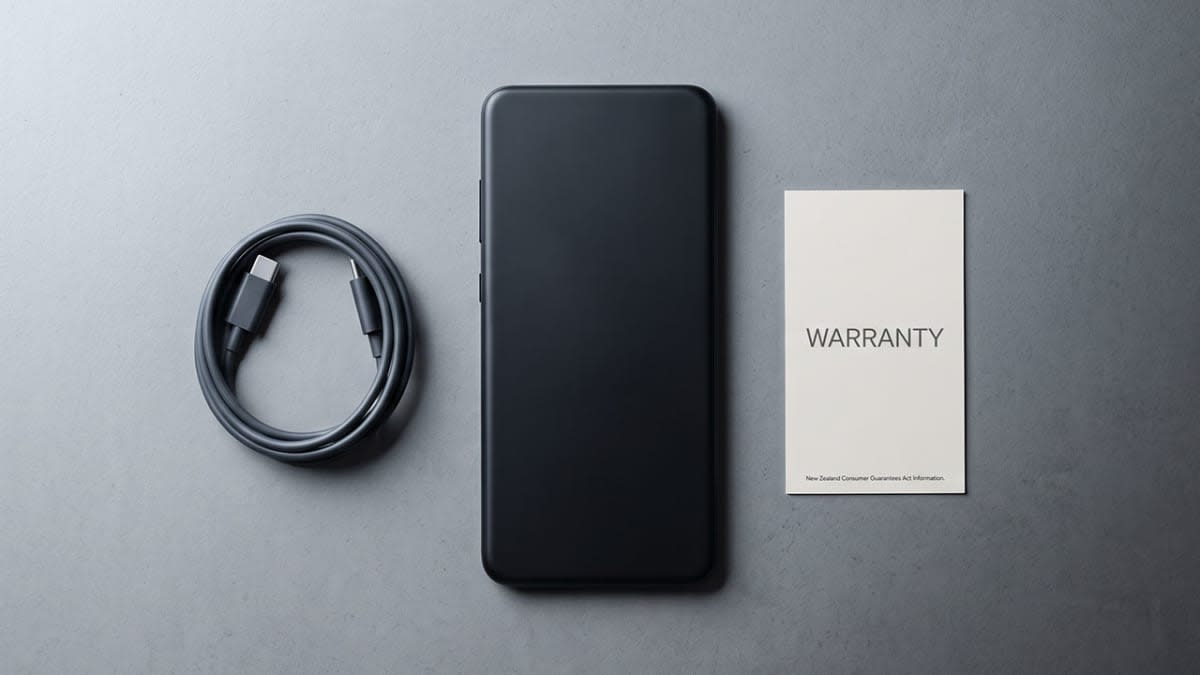
Parallel Importing: What you keep and what you hand over
Keep | Hand Over |
|---|---|
Your Consumer Guarantees Act rights against the NZ shop that sold it to you | The manufacturer's warranty. It may not apply to a parallel import, and the brand's support may not either. |
A genuine product, not a knock-off. | Certainty about the hardware. Wrong plug, unreadable manual, or a phone locked to the wrong network. Band support is the classic trap. |
A lower price, if there really is one. | Guaranteed new stock. Some grey imports, phones and consoles especially, are refurbished rather than new. |
Any real leverage if the seller is overseas. Good luck enforcing anything against an offshore shop. |
Importing it yourself
Skip the grey shop, order straight off an overseas site, and you are now the importer. This is where the maths quietly turns on you.
GST applies to imported goods, end of story. Customs won't collect it unless the shipment is over NZ$1,000, and under that the overseas supplier is meant to charge you the 15% at checkout anyway, which has been the rule since December 2019. Go over $1,000 and Customs works the GST out on customs value plus freight plus insurance plus duty.
Then there is the new one, which is the thing hardly anyone has clocked yet. Since 1 April 2026, Customs and MPI have charged a levy on goods crossing the border. Low-value air freight is NZ$2.21 plus GST per consignment. Anything over NZ$1,000 is high-value, and a high-value air import cops a combined Customs and MPI levy of NZ$51.81.
When I would parallel import
When the thing is never sold here. Easily the best reason, and the whole point of Why Some Products Are Never Released in New Zealand at All. If a brand has decided we are too small to bother with, the grey importer isn't undercutting anyone. There is no local warranty to lose because there was never one on offer.
When the saving is real, not rounding. Monitors, keyboards, headphones, camera lenses, storage. Stuff where the local RRP is padded and the manufacturer warranty is close to meaningless anyway, because if it dies you bin it and buy another rather than start an RMA.
When the seller is a New Zealand business with its own warranty. Parallel Imported, for one, backs its products with a one-year New Zealand warranty and says it will meet its Consumer Guarantees Act obligations. That isn't the manufacturer's warranty and I won't pretend it is, but it is a warranty, from a company with an Auckland address, and it beats a stranger on eBay by a mile.
FAQ
Is parallel importing legal in New Zealand?
Yes. It is lawful where the trademark was applied with the owner's authorisation, so importing the goods doesn't infringe trademark or copyright. Parallel imported devices are genuine, not counterfeit.
Do I get a warranty on a parallel imported phone or laptop?
You keep your Consumer Guarantees Act rights against the New Zealand retailer who sold it to you. What you probably won't get is the manufacturer's warranty. Apple, for one, may restrict warranty service for iPhone and iPad to the country where the device was first sold.
Do I pay GST if I import a gadget myself?
Yes. Customs collects 15% GST on shipments over NZ$1,000, and under that the overseas supplier should charge it at checkout. Since 1 April 2026 there is also a border levy of NZ$2.21 plus GST on low-value air freight and NZ$51.81 on high-value air imports.
Is a parallel import the same as a fake?
No. Parallel imports are genuine products that came in outside the official distribution channel. Counterfeits are fakes made by someone other than the original manufacturer.