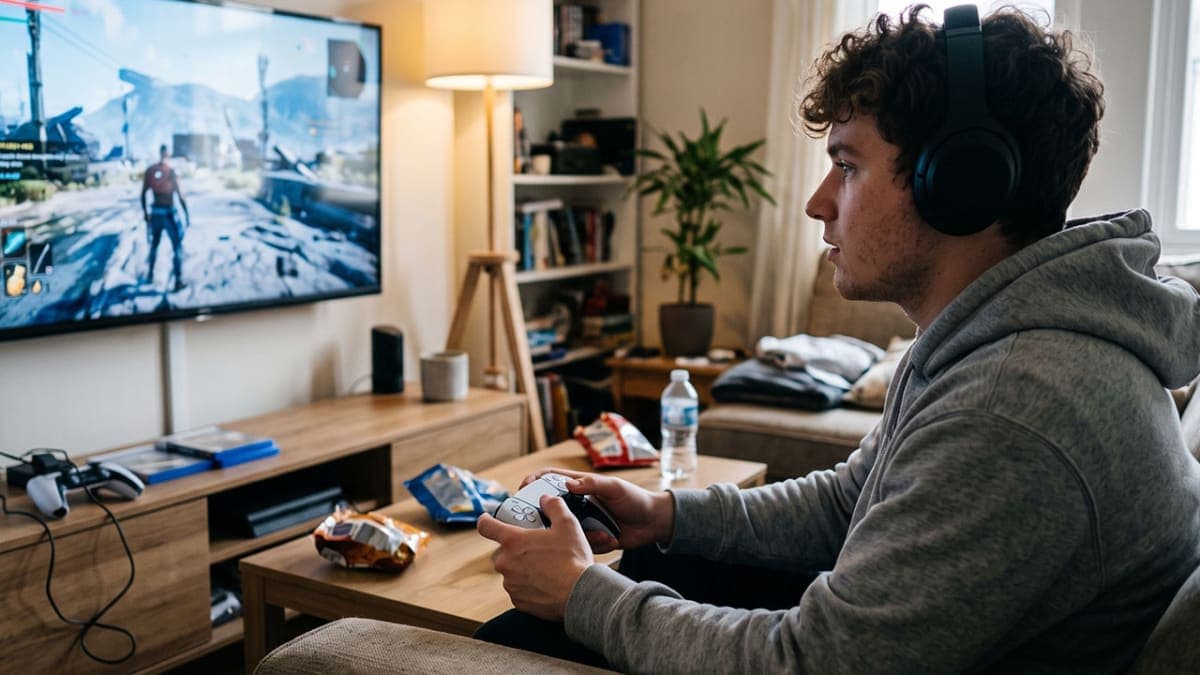
Sony is ending PlayStation physical discs, and New Zealand is going to get the change on exactly the same terms as everyone else.
From January 2028, every new PlayStation game will be digital only, whether you're playing it on the PS5 you own now or the PS6 that lands later. Sony confirmed it on the PlayStation Blog: new game discs will stop being produced, and games will sell instead as a download or a code in a box.
For Kiwi gamers, the sting isn't really the hardware so much as everything you quietly give up along with the disc: resale, lending, and the second-hand shelf that has always taken the edge off our prices.
The change reaches New Zealand from January 2028 and applies to new games from every studio, Sony's own and third parties alike. Anything released before that date carries on as normal, so the disc games of 2027 will still exist and your current collection will still play, provided your console has a drive to read it.
What Sony confirmed about PlayStation physical discs
Essentially, it’s pretty straightforward, disc production for all new PlayStation games ends in January 2028, and after that new releases will arrive digitally through the PlayStation Store or as a boxed code at retail. Games that shipped on disc beforehand, right up to the end of 2027, won't be pulled or altered.
Sony’s stated reason is that digital buying has overtaken physical, and the company is following where the money has already gone. But, based on fiscal earnings as of March 2025, does Sony need to chase the money?
Now this hasn't come out of nowhere. GTA 6 got there first, announcing a "physical" edition that turned out to be a download code in a box rather than a game on a disc, and Sony has now made that the standard rather than the exception.
The backlash has been loud, and it keeps circling back to ownership. A disc is something you hold and can sell, lend or leave on a shelf for a decade, whereas a digital licence is only permission to access a file for as long as the store and your account both survive. Preservation groups have been warning about this for years, because a delisted digital title can quietly disappear in a way a disc on a shelf never does.
There's an irony in Sony of all companies making this move. Back in 2013 it spent its energy mocking Microsoft, whose Xbox One had launched with used-game and always-online restrictions, and even put out a clip showing how simple it was to pass a PS4 disc to a mate. The company that turned "you own your games" into a selling point is now quietly retiring the disc that made the boast true.
This is bigger than the PS5
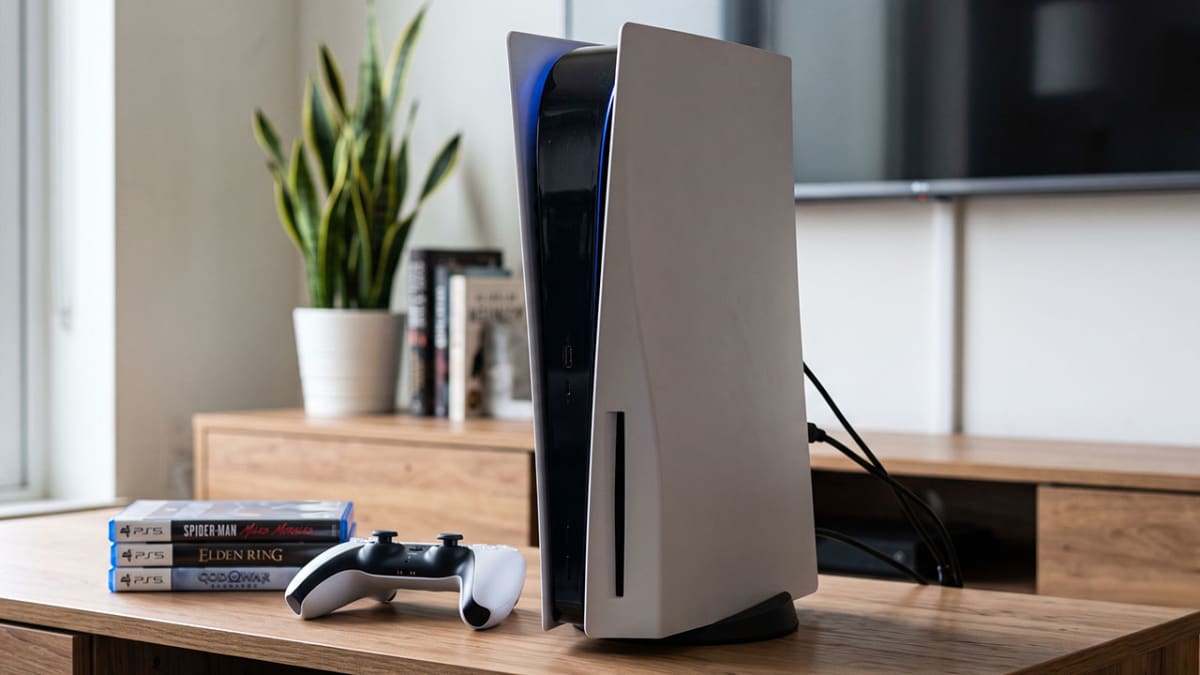
Sony framed this as a company-wide direction rather than a PS5 housekeeping note, and that framing is the part worth dwelling on. Your current setup is safe enough, since the PS5 and PS5 Pro still read discs whether built in or through the add-on drive, so the real question hangs over the PS6.
Sony hasn't confirmed anything about the next console's design, but a company winding disc production down in the same window it's expected to launch new hardware is not a company planning to build a disc drive into it.
The reports already floating around put the PS6 at 2028 or later, which lines up with the disc cutoff almost to the month. Assume the next PlayStation is disc-free and you'll probably be right.
What it means for New Zealand gamers
The console price is the cost everyone sees, but the resale market is the one that slips past most people, and in New Zealand it carries more weight than it does almost anywhere else.
We have always leaned on the second-hand shelf. EB Games, Mighty Ape, Cash Converters and Trade Me all run trade in options, and that resale value is part of what makes a NZ$120 game bearable in the first place. You finish a game, onsell it, and claw back thirty or forty dollars towards the next one. A digital licence gives you none of that back, because you can't onsell it or lend it, and the trade-in credit you'd normally get out of an old game or console is worth precisely nothing with a download.
Discs are where the discounts live, too. The Warehouse, EB and JB Hi Fi regularly run physical game specials that undercut the PlayStation Store, which almost never drops its prices as far, so going all-digital means losing the sale shelf as well as the resale one. For a market priced like ours, that's a dollar concern, and it turns every new game into a one-way purchase.
Should you buy a disc PS5 in NZ now?
If discs matter to you at all, the window to lock in a disc-capable console is open now, closing slowly, and quite possibly gone for good once the PS6 arrives.
The PS5 Pro (NZ$1,619.95) is all-digital out of the box with no drive, and so is the PS5 Digital (NZ$1,099.95), which leaves only the standard PS5 disc model (NZ$1,199.95) with a drive built in. You can add Sony's external disc drive to a Pro or Digital console for somewhere around NZ$130 to NZ$140, and it handles PS5 and PS4 game discs along with 4K Blu-ray and DVD movies. The premium for going disc is small, and NZ console pricing is a lot less brutal than the raw sticker suggests once you get into how our tech prices actually stack up.
The honest read is this. A disc drive after 2028 only earns its place on games made before the cutoff, on your existing library, on the second-hand shelf and on physical movies, and it does nothing for new releases because there won't be any on disc to play. So if you collect, or you want resale value and a cheap way into used games, buy a disc setup while pre-2028 discs are still being pressed. If you already buy everything digitally, none of this touches you and there's no reason to pay for a drive you'll never load.
The download question for NZ
There's one catch that bites harder here than in most places. Big modern games routinely run past 100GB, and an all-digital library means every one of them is a large download with no disc to fall back on when your connection has a bad day. City fibre swallows that without noticing, but if you're rural, on fixed wireless or satellite, or on a plan you have to keep half an eye on, a future where every game and every patch is a fat download is worth thinking through before you buy into digital-only hardware.
ProductPrice
PS5 Pro$1,619.95
PS5 Slim$1,199.95
PS5 Digital$1,099.95
PS5 Disc Drive add-on$140
PlayStation Portal$398
FAQ
When do PlayStation physical discs stop in New Zealand?
New game disc production ends in January 2028, on the same timeline as the rest of the world. Games released before then will still come on disc, and Sony will keep selling games in shops after 2028, just as boxed download codes rather than discs.
Can I still play my PS5 discs after 2028?
Yes. The change only stops new discs being made, so any disc you already own will keep working on a console with a drive, and you can still buy and sell pre-2028 discs second-hand.
Will the PS6 have a disc drive?
Sony hasn't said, but this announcement makes a built-in drive look unlikely on the next console. The disc cutoff lines up with the PS6's expected launch window, so if disc playback matters to you, don't count on getting it.
Should I get a disc PS5 or add a disc drive?
If you resell games, collect, or want a route into cheap used discs, buy a disc-capable console now. The standard PS5 has a drive built in, or you can add one to a Pro or Digital for roughly NZ$130 to NZ$140. If you already buy everything digitally, skip it.